
Introduction
In today’s fast-paced world, stress has become a “normal” part of life. But when stress escalates into chronic anxiety or sudden panic attacks, it stops being just a nuisance—it becomes a barrier to living.
While modern medicine often treats these symptoms with sedatives, Ayurveda looks deeper. We view stress and anxiety not just as chemical imbalances in the brain, but as a disturbance in the Tridosha (specifically Vata) and the Manas Gunas (Satva, Rajas, Tamas).
The Ayurvedic Perspective: What is Anxiety?
According to Ayurveda, the mind (Manas) and the body are inextricably linked. Anxiety (Chittodvega) is primarily caused by an aggravation of Vata Dosha, specifically Prana Vata (which governs the mind and nervous system).
When Vata is aggravated by irregular sleep, junk food, or excessive worry, it dries out the nourishing channels of the mind. This leads to:
Racing thoughts (Rajasic state)
Palpitations and tremors
Fear and insomnia
Ayurveda’s 3-Pronged Approach to Relief
1. Medhya Rasayanas (Nervine Tonics)
Ayurveda utilizes specific herbs known as Medhya Rasayanas that nourish the brain tissues and calm the nervous system without making you drowsy.
Brahmi: The gold standard for cooling the mind and improving focus.
Ashwagandha: An adaptogen that lowers cortisol levels and builds resilience against stress.
Jatamansi: Excellent for those suffering from “tired but wired” insomnia.
2. Therapies (Panchakarma)
Sometimes, oral medication isn’t enough; we need to physically calm the Vata.
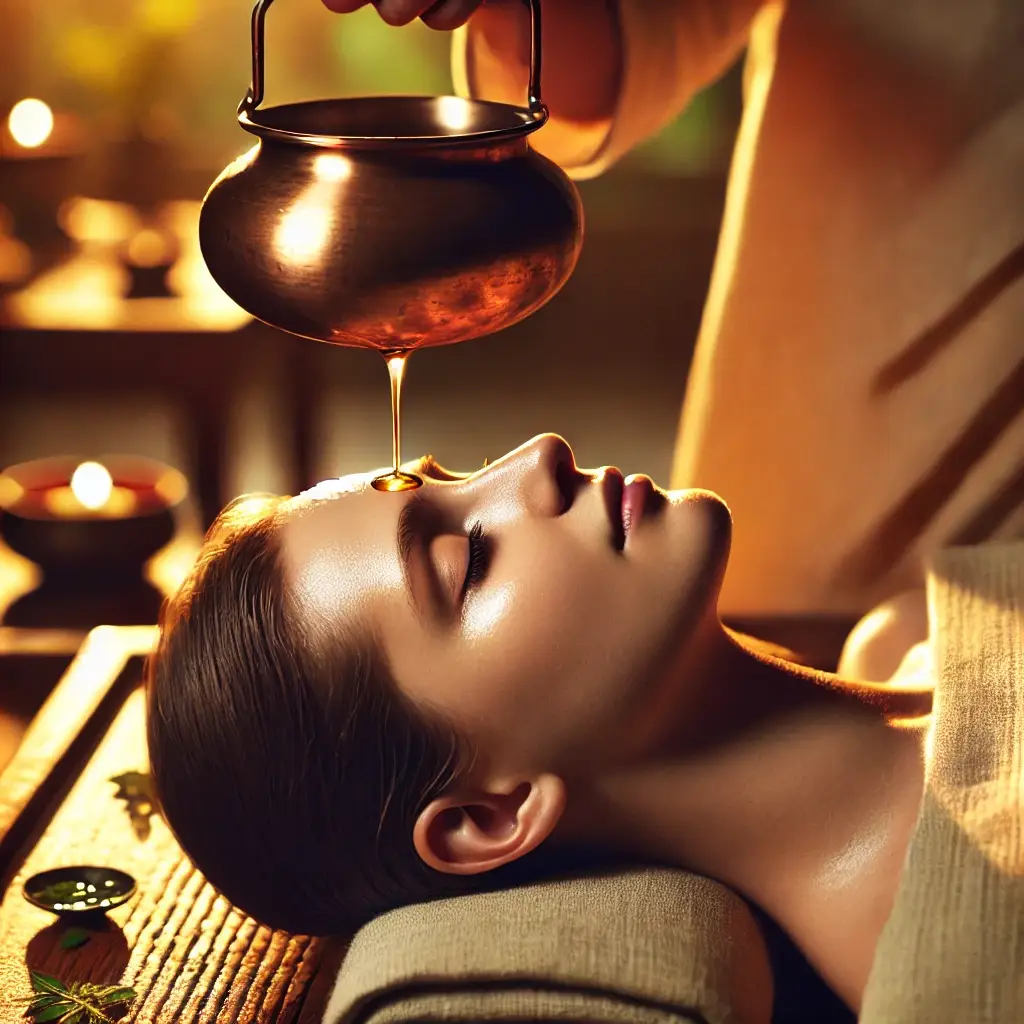
Shirodhara: The continuous pouring of warm medicated oil on the forehead (the “third eye”). This directly stabilizes the nervous system and is one of the most effective treatments for panic attacks.
Nasya: Administering medicated drops through the nose, which is the direct gateway to the brain (Nasa Hi Shiraso Dvaram).
3. Satvavajaya Chikitsa (Ayurvedic Psychotherapy)
Ayurveda acknowledges that mental health requires mental discipline. Satvavajaya involves restraining the mind from unwholesome objects. This includes:
Pranayama: specifically Anulom Vilom (Alternate Nostril Breathing) to balance the brain hemispheres.
Routine (Dinacharya): Waking up and eating at consistent times is the quickest way to pacify Vata.
Immediate Tips for a Panic Attack
If you feel a panic attack coming on, try these grounding techniques:
Warmth: Drink a cup of warm water or herbal tea. Cold increases Vata; warmth soothes it.
Oil Application: Massage warm sesame oil on the soles of your feet and the crown of your head.
Deep Belly Breathing: Focus on extending your exhale, which engages the parasympathetic nervous system.
Conclusion
You do not have to live with constant worry. By addressing the root cause—the Vata imbalance—you can reclaim your peace of mind.
If you are struggling with chronic stress or anxiety, book a consultation today to create a personalized Ayurvedic treatment plan.